A solid, smooth concrete driveway is a point of pride and a vital part of your home’s curb appeal. It provides a reliable surface for your vehicles and a welcoming path to your front door. So, when those first hairline fractures appear, or when existing cracks start to widen, it can be a significant source of worry. Why is this happening? Is it a minor cosmetic flaw, or a sign of a deeper, more expensive problem?
As a homeowner, understanding the root causes of a cracking
concrete driveway is the first step toward effective repair and long-term prevention. In this comprehensive guide, we will break down the most common reasons your concrete pavement is failing, giving you the clarity and confidence you need to decide when it's time to stop patching and invest in a professional solution.
Why Is My Concrete Driveway Cracking? Understanding the Root Causes
The simple answer is that concrete is strong, but not invincible. It is designed to carry heavy loads and withstand the elements, but it is also a rigid material that is susceptible to movement, stress, and poor preparation.
To effectively address the issue, we must look at the problem from the ground up. The causes of cracking can generally be sorted into three main categories: issues with the initial construction, environmental factors, and excessive stress.
1. Construction and Installation Flaws
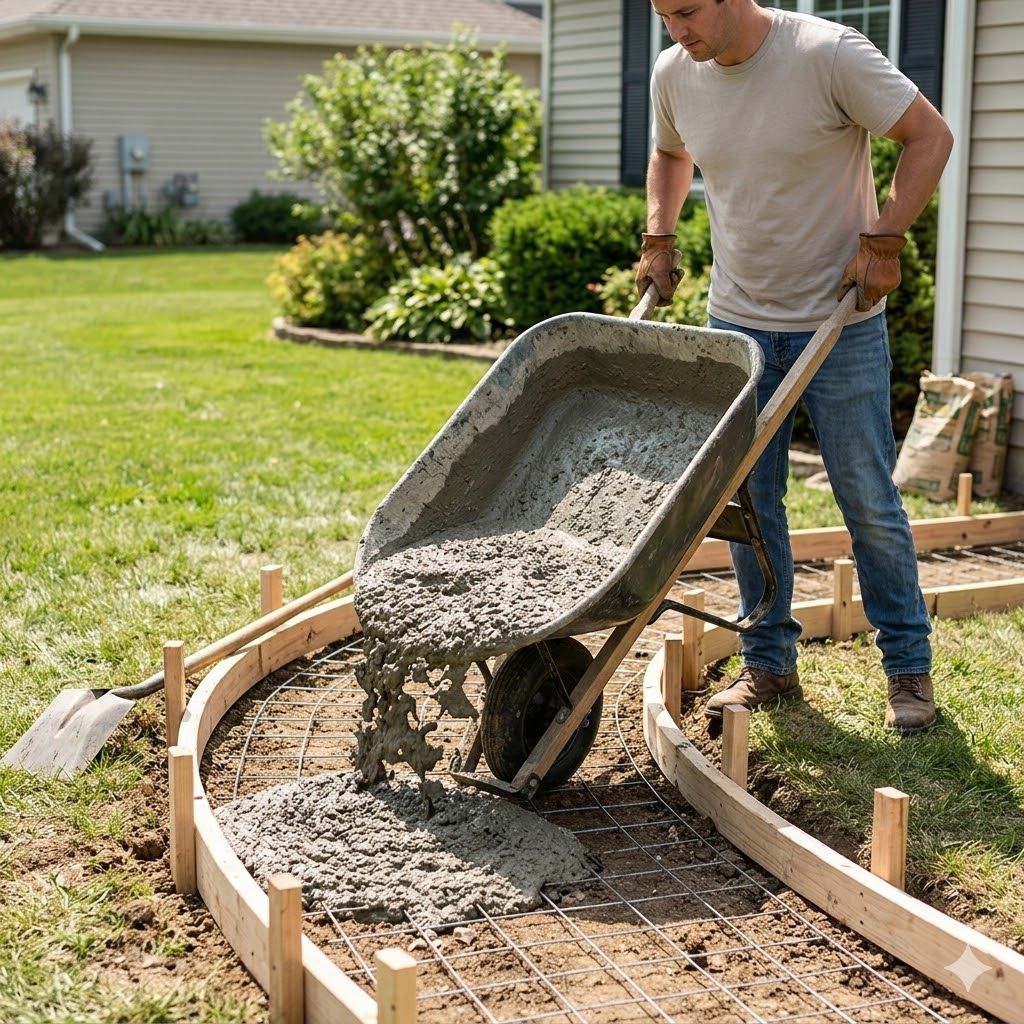
The longevity of your concrete driveway begins long before the first pour. Mistakes made during the preparation and mixing stages are often the underlying cause of cracks that appear years later.
A. Poor Subgrade Preparation
The "subgrade" is the soil and materials directly beneath the concrete slab. It acts as the foundation for the entire driveway. If this layer is not properly compacted or prepared, it can lead to shifting and settling, which the rigid concrete cannot handle.
- Uneven Compaction: If the soil is not uniformly packed, one section of the concrete driveway might settle faster than another, creating voids and stress points that lead to cracking.
- Improper Drainage: If water pools beneath the subgrade, it can erode the soil over time, washing away support and causing the slab to sink.
B. Incorrect Water-Cement Ratio
When mixing the concrete, the amount of water used is critical.
- Too Much Water: An overly wet mix makes the concrete easier to pour and smooth, but it significantly weakens the final product. As the excess water evaporates, it leaves behind microscopic voids, making the slab porous and prone to shrinkage cracking. For insights into proper concrete planning, see our article on 5 Steps How to Prepare for a Concrete Project Without Surprises.
C. Lack of Control Joints
This is one of the most common—and preventable—causes of cracking. Concrete naturally shrinks as it cures. Control joints (often called "expansion joints" or "contraction joints") are intentional, shallow cuts placed strategically in the slab. They create a weak line where the concrete can safely crack beneath the joint without the crack being visible or damaging to the structure.
The Rule of Thumb: Without properly placed control joints, the concrete will crack wherever the internal stress is greatest. If you have large, unjointed sections, the slab will inevitably crack randomly.
D. Insufficient Curing Process
Curing is the process where concrete gains its strength, typically over 7 to 28 days. This requires maintaining consistent temperature and moisture. If the concrete is allowed to dry out too quickly (especially in hot, sunny, or windy conditions), it will develop premature surface cracks (known as crazing) and fail to reach its maximum strength, making it vulnerable to future damage.
2. Environmental and Weather Factors
The outdoor environment—especially in regions with harsh seasons—puts immense strain on even the best-installed concrete driveway.
E. The Freeze-Thaw Cycle
This is a major culprit in colder climates. Water seeps into the tiny, porous spaces within the concrete. When the temperature drops below freezing, this water turns to ice and expands by about 9%. This expansion creates enormous internal pressure that forces the cracks wider. When the ice melts, the process repeats, relentlessly causing the concrete to break down.
F. Tree Roots
Mature trees near your driveway can be a beautiful feature, but their roots are powerful. As the roots grow, they seek out water and nutrients, and their sheer force can lift and shift the concrete slab, leading to large, structural cracks. If you are noticing sections of your concrete driveway lifting, tree roots may be the cause.
G. Temperature Changes (Thermal Expansion)
Concrete, like most materials, expands slightly when heated and contracts when cooled. While subtle, this constant movement, particularly on a large surface area like a driveway, can lead to internal stresses. Proper control and expansion joints are designed specifically to accommodate this normal thermal movement.
3. External and Applied Stress
Sometimes, the cracks are a direct result of how the driveway is used after installation.
H. Heavy and Consistent Loads
While a concrete driveway is built for vehicles, repetitive stress from very heavy loads—such as large delivery trucks, recreational vehicles (RVs), or commercial equipment—can exceed the slab’s capacity, especially if the concrete mix was weak or the subgrade was poorly prepared.
Statistic: According to a report on pavement wear, the impact of a single axle load increases exponentially. A dual-tandem axle truck (common for deliveries) can impart stresses equivalent to tens of thousands of passenger cars, highlighting why heavy commercial traffic can quickly damage a residential concrete driveway.
I. Poor Drainage and Water Runoff
If your gutters, downspouts, or the surrounding landscaping direct water to pool on or alongside your concrete driveway, it can saturate the subgrade, weaken the edges, and lead to erosion underneath the slab. This lack of support ultimately results in cracking and sinking.
J. Aggressive Use of De-Icing Salts
While salt melts ice, it is highly detrimental to concrete. Most de-icing salts, particularly those containing ammonium sulfate or ammonium nitrate, chemically attack and break down the cement paste. Even common rock salt (sodium chloride) exacerbates the freeze-thaw damage by increasing the number of cycles and drawing more moisture into the slab.
When to Call a Professional
It is critical for homeowners to know when a hairline crack is a simple DIY fix versus when it’s a sign to call an experienced contractor, like Precision Paving Mankato.
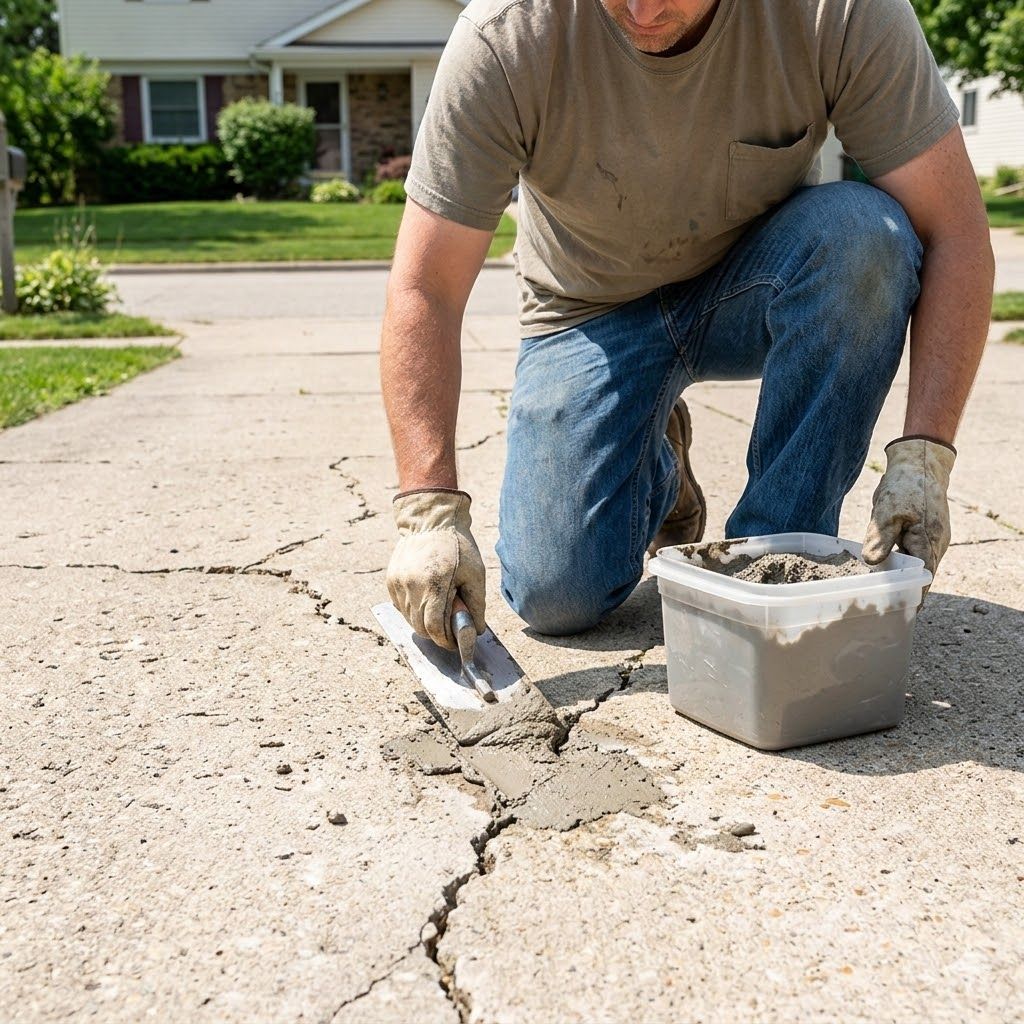
Small Cracks (Under 1/4 inch): These are often minor shrinkage cracks and can sometimes be cleaned and sealed by a homeowner to prevent water infiltration.
Large, Spreading, or Uneven Cracks: These are red flags that indicate a structural issue with the subgrade or the concrete itself. Look for:
- Cracks wider than 1/2 inch.
- "Spiderweb" or map-pattern cracking (Crazing or D-cracking).
- One side of the crack being significantly higher or lower than the other (indicates settling).
- Large potholes or sections of the driveway sinking.
If you are experiencing any of these major signs, patching is only a temporary fix. It may be time for a comprehensive repair or a new installation. Review our guide on 5 Telltale Signs When to Stop Patching and Invest in a New Concrete Driveway for more detailed guidance.
Expert Insight: A Note on Proper Installation
A cracked concrete driveway often points back to the installation phase. As industry professionals, we understand that quality materials and meticulous preparation are non-negotiable.
Quote: "The strength of a concrete driveway is not just in the material itself, but in the unseen foundation beneath it. Proper subgrade preparation, correct water-cement ratio, and strategically placed control joints are the triple pillars of a driveway built to last for decades." -
A Certified Paving Specialist
Frequently Asked Questions (FAQ)
Q1: Can I repair a large crack in my concrete driveway myself?
For minor, non-structural cracks (under 1/4 inch), sealing them yourself can prevent water damage. However, for large, deep, or widening cracks, or if the slabs are uneven, professional repair is necessary. This often involves techniques like concrete foundation repair or mudjacking to address the underlying subgrade issue. Attempting DIY on structural cracks usually leads to quick reappearance. For professional solutions, check out our Concrete Driveway Repair Service in Mankato, MN.
Q2: How can I prevent my new concrete driveway from cracking?
Prevention involves good maintenance and ensuring quality installation from the start. Prevention tips include:
- Seal It: Apply a quality concrete sealer every 2-5 years to repel moisture and de-icing chemicals.
- Redirect Water: Ensure downspouts and landscaping drain water away from the driveway edges.
- Avoid Salts: Use sand or non-chloride de-icers (like calcium magnesium acetate) instead of rock salt.
- Limit Heavy Loads: Try to keep overly heavy vehicles off the pavement.
Q3: What’s the difference between a minor surface crack and a structural crack?
Minor surface cracks (crazing or hairline cracks) are shallow and typically only affect the appearance; they are often caused by rapid surface drying. Structural cracks are deep, often extend through the entire slab, and are usually caused by subgrade movement, heavy loads, or freeze-thaw damage. Structural cracks threaten the integrity of the entire
concrete driveway.
Don't Let Cracks Become Catastrophes
Cracks in your concrete driveway are more than an eyesore; they are a warning sign that the pavement's integrity is compromised. Ignoring them allows water to seep in, accelerating damage from the freeze-thaw cycle and compromising the subgrade, leading to more expensive repairs down the line.
Whether you need expert diagnosis, minor crack repair, or a full concrete installation, our team at Precision Paving Mankato is ready to provide durable, professional solutions. We understand the unique challenges faced by homeowners in the region, and we ensure the proper subgrade preparation and concrete pouring techniques that prevent cracks before they start.
If you are concerned about the cracking in your concrete driveway, don't wait for a small problem to become a major repair. Contact the experts at Precision Paving Mankato today for a professional evaluation and a free, no-obligation quote. Visit our Contact Us
page or call us directly to restore the look and function of your driveway!